
EEG (Electroencephalogram)
In-office EEG and ambulatory EEG testing to evaluate brain electrical activity and assist in diagnosing seizure disorders and other neurological conditions.
EEG Q & A
Learn what an EEG measures, what to expect during the procedure, and how ambulatory EEG testing differs from a standard in-office test.
What is an EEG?
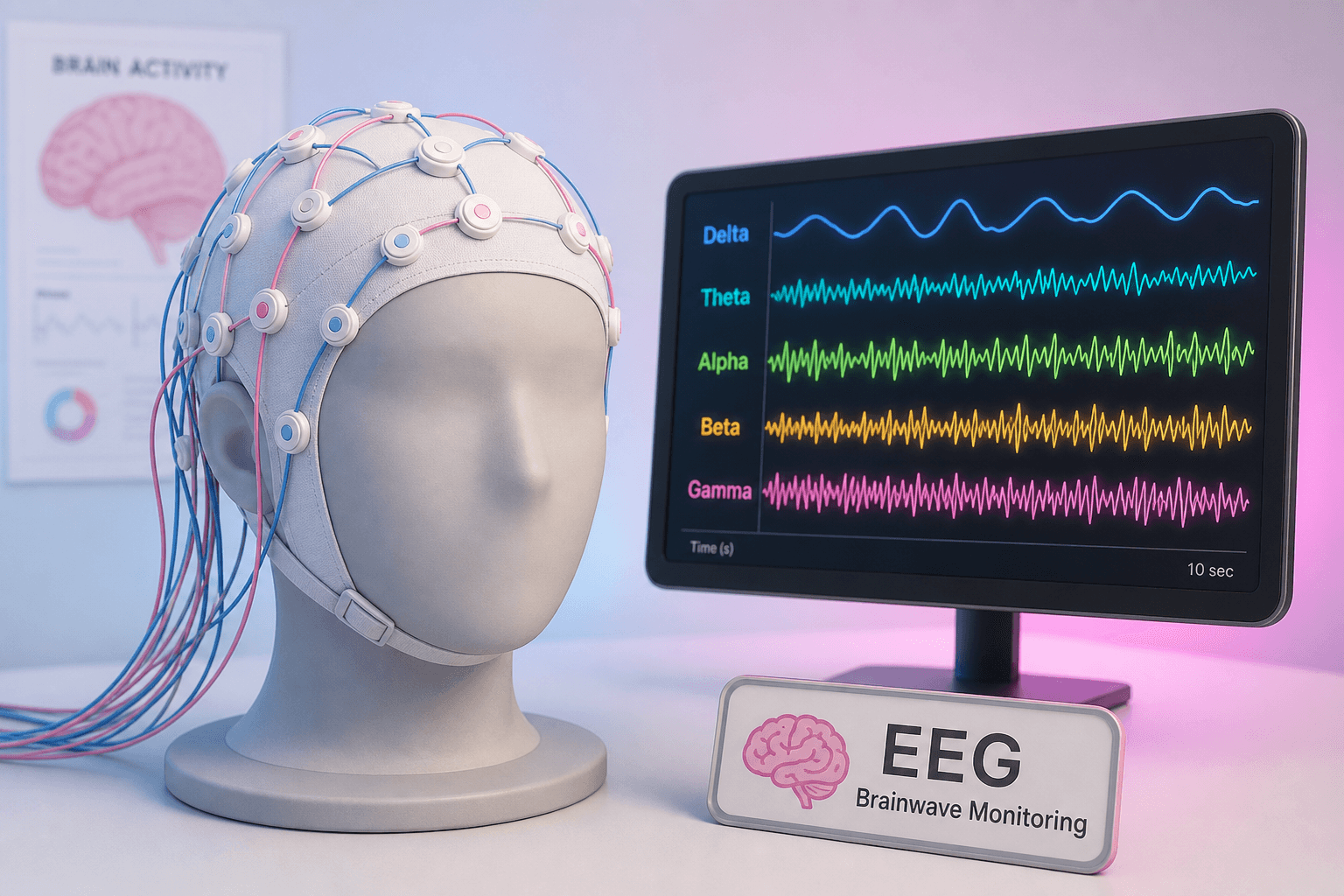
An electroencephalogram (EEG) records and measures the electrical activity of the brain. The test is administered by placing sensors that record brain activity on the head in different spots. The sensors send the data they collect to a computer, which creates a report for doctors to read.
What is Going for an EEG Like?
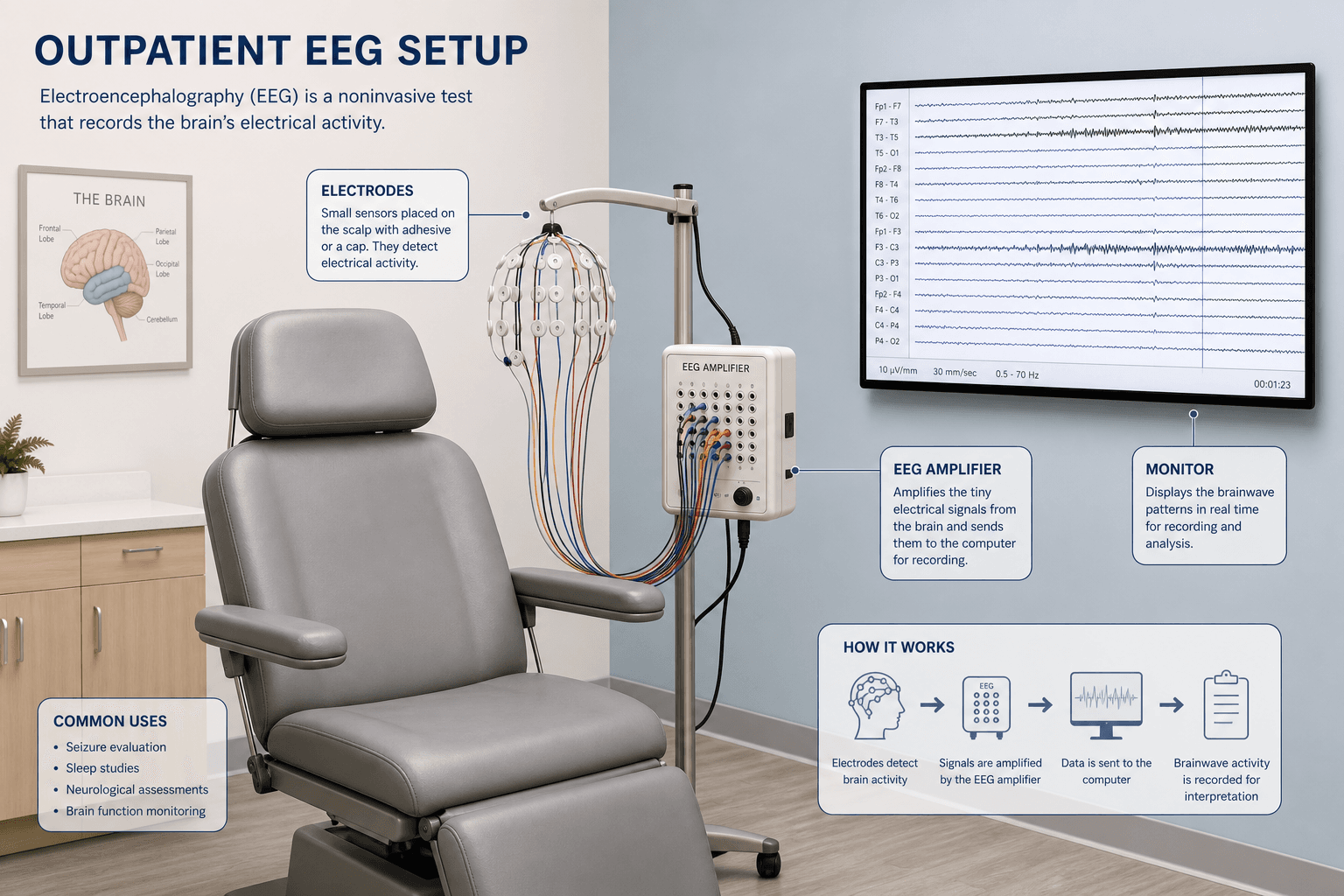
An EEG is usually performed in a doctor's office as an outpatient procedure. (If a patient has already been admitted to a hospital for a medical emergency, the test might be administered in the hospital.) The procedure is longer than a typical check-up, but it still takes only part of a day.
The test itself is usually administered by a technician, and proceeds as follows:
- The technician measures and marks the patient's head (the markings are temporary).
- The technician places flat electrodes at certain locations on the patient's head.
- The patient relaxes while the technician runs the test.
A doctor may ask a technician to do certain things during the EEG, such as record the patient, show the patient a strobe light, or ask the patient to hyperventilate.
What is an Ambulatory EEG?
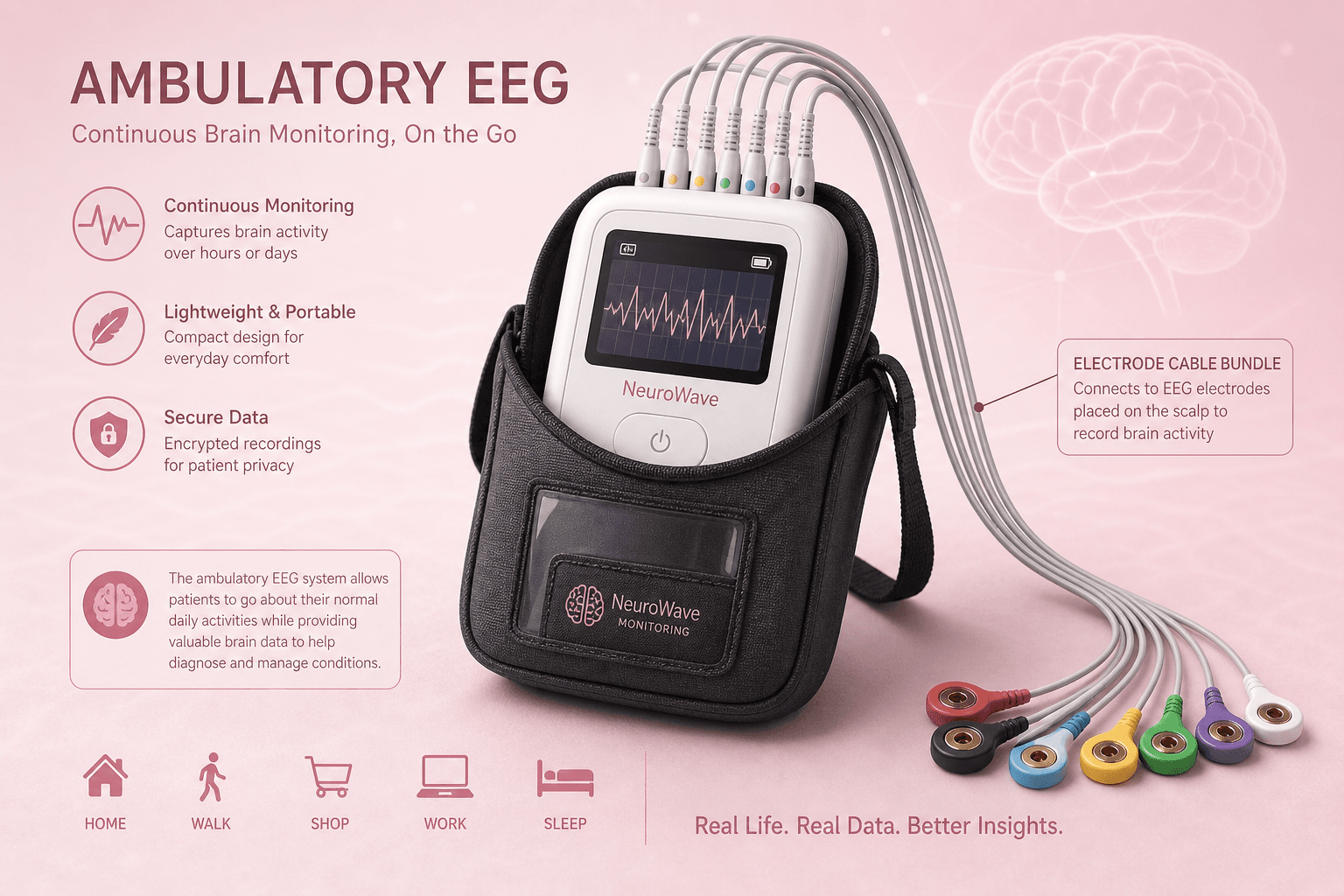
An ambulatory EEG, or an AEEG, is similar to a typical EEG. Electrodes are placed on the head to measure brain activity. An ambulatory EEG, however, measures brain activity over a longer period of time and in more circumstances.
During an ambulatory EEG:
- Flat electrodes are affixed to the patient's head at the doctor's office.
- The patient's brain activity is measured over the course of a day or more via a portable monitor.
- The patient is free to leave the doctor's office and go about their business while their brain activity is being recorded.
- The patient returns when the test is complete so the doctor can read the data and the electrodes can be removed.
Insurance
Please call our office if you have any questions about your insurance.

















Expert EEG Testing in Tampa
Dr. Anoop K. Reddy offers in-office EEG and ambulatory EEG testing to help diagnose seizure disorders and other neurological conditions.
← Back to All Services